

- University
- Academic
- Schools/Vocational Schools
- Vocational School of Justice
- Vocational School
- Vocational School
- Department of Banking and Insurance (Turkish)
- Department of Computer Programming (Turkish)
- Department of Foreign Trade (Turkish)
- Department of Graphic Design (Turkish)
- Department of Interior Design (Turkish)
- Department of Construction Technology (Turkish)
- Department of Occupational Health and Safety (Turkish)
- Department of Media and Communication (Turkish)
- Department of Architectural Restoration (Turkish)
- Department of Radio and Tv Programming (Turkish)
- Department of Civil Aviation Cabin Services (Turkish)
- Department of Civil Aviation Transportation Management (Turkish)
- Department of Tourism and Hotel Management (Turkish)
- Department of Applied English Translation
- Vocational School Of Health Services
- Vocational School Of Health Services
- Department of Child Development (Turkish)
- Department of Physiotherapy (Turkish)
- Department of Paramedic (Turkish)
- Department of Opticianry (Turkish)
- Department of Medical Documentation and Secreteriat (Turkish)
- Department of Medical Imaging Techniques (Turkish)
- Department of Medical Laboratory Techniques (Turkish)
- Department of Elderly Care (Turkish)
- School of Applied Management Sciences
- School of Foreign Languages
- Faculties
- Faculty of Arts and Sciences
- Faculty of Fine Arts and Design
- Faculty of Law
- Faculty of Communication
- Faculty of Business
- Faculty of Engineering
- Faculty of Engineering
- Department of Computer Engineering
- Department of Biomedical Engineering
- Department of Electrical and Electronics Engineering
- Department of Industrial Engineering
- Department of Food Engineering
- Department of Genetics and Bioengineering
- Department of Aerospace Engineering
- Department of Civil Engineering
- Department of Mechanical Engineering
- Department of Mechatronics Engineering
- Department of Software Engineering
- Faculty of Health Sciences
- Medicine
- Graduate School
- Common Courses
- Schools/Vocational Schools
- Research
- Research Centers
- Library
- Smart Campus
- Technology Transfer Office
- İzmir Sciencepark
- Continuous Education Center (EKOSEM)
- Children's University
- Ethics Committee
- Teaching and Learning Center (EKOEĞİTİM)
- Psychology Application and Research Center
- Researcher Training Coordinatorship
- Research Collaborations And Innovation Coordinatorship
- Campus
- INTERNATIONAL
- Contact
- 25TH YEAR
Department of Sociology
GEET 202 | Course Introduction and Application Information
| Course Name |
Multiculturalism and Globalization
|
|
Code
|
Semester
|
Theory
(hour/week) |
Application/Lab
(hour/week) |
Local Credits
|
ECTS
|
|
GEET 202
|
Fall/Spring
|
3
|
0
|
3
|
5
|
| Prerequisites |
None
|
|||||
| Course Language |
English
|
|||||
| Course Type |
Service Course
|
|||||
| Course Level |
First Cycle
|
|||||
| Mode of Delivery | - | |||||
| Teaching Methods and Techniques of the Course | - | |||||
| National Occupation Classification | - | |||||
| Course Coordinator | ||||||
| Course Lecturer(s) | ||||||
| Assistant(s) | - | |||||
| Course Objectives | Multiculturalism and Globalisation are central concepts across numerous academic disciplines in the 21st century. Over time they have given rise to a variety of concepts and theories that attempt to explain their impact on contemporary sociteties, states, and individuals. Multiculturalism cannot be fully understood in isolation from globalisation. In today’s rapidly changing world shaped by globalisation, multiculturalism remains one of the most widely discussed and contested issues—both within academia and in public discourse. This course is designed to provide students with a comprehensive understanding of multiculturalism and globalisation, offering knowledge that is valuable for both research and professional careers beyond academia. By fostering critical thinking and encouraging creativity, it also aims to broaden students’ perspectives, helping them interpret today’s globalised world, address its challanges, and anticipate the near future in a more insightful and enriched way. |
| Learning Outcomes |
The students who succeeded in this course;
|
| Course Description | In the opening weeks, the course will address the topics of multiculturalism and globalisation separately, equipping students with a foundational understanding of these two phenomena. This will be followed by a week dedicated to key theories of multiculturalism and globalisation. In the subsequent weeks, the course will explore the relationship between multiculturalism and globalisation in the context of phenomena such as migration, global inequalities, and populism. In the concluding weeks, attention will turn to the challenges and future prospects of multiculturalism and globalisation, concluding with student presentations. |
| Related Sustainable Development Goals |
|
|
|
Core Courses | |
| Major Area Courses | ||
| Supportive Courses | ||
| Media and Management Skills Courses | ||
| Transferable Skill Courses |
WEEKLY SUBJECTS AND RELATED PREPARATION STUDIES
| Week | Subjects | Related Preparation |
| 1 | Introduction to the course: Objectives and Expectations | |
| 2 | What is globalisation? Key Ideas and Concepts | 1) Steger, M. B. (2023). Globalization: A very short introduction. Oxford University Press. Ch. 1 & 2 2) Heywood, A. (2019). Politics, Red Globe Press. Ch.7 (pp. 293-309) |
| 3 | What is Multiculturalism? Key Ideas and Concepts | 1) Heywood, (2019), Ch. 8 2) Rattansi, A. (2011). Multiculturalism: A very short introduction. Oxford University Press (Introduction) & Ch.1 |
| 4 | Theories of Globalisation | 1)Ritzer, G., & Dean, P. (2019) Globalization: The Essentials. Wiley‐Blackwell. Ch.2 & Ch. 7 |
| 5 | Theories of Multiculturalism | 1) Heywood, A. (2021). Political ideologies: An introduction. Red Globe Press. Ch. 11 |
| 6 | Multiculturalism in the Context of Globalisation: Understanding Diversity in a Connected World | 1) Smallman, S, & Brown, K. (2020). Introduction to international and global studies. Univ of North Carolina Press. Ch. 5 2) Shome, R. (2012). Mapping the limits of multiculturalism in the context of globalization. International Journal of Communication, 6, 144–165. 3) Steger, Ch. 5 |
| 7 | Migration | 1) Ritzer & Dean, Ch. 8 2) Pakulski, J, & Markowski, S. (2014). Globalisation, immigration and multiculturalism – the European and Australian experiences. Journal of Sociology, 50(1), 3-9 |
| 8 | Midterm Exam | |
| 9 | Global inequalities | 1) Ritzer & Dean, Ch. 11 & 12 |
| 10 | Populism, Multiculturalism and Globalisation | 1) Heywood, (2021), Ch. 8 2) Kymlicka, W. (2016). Defending diversity in an era of populism: Multiculturalism and interculturalism compared. In N. Meer, T. Modood R. Zapata-Barrero (eds.), Multiculturalism and interculturalism: Debating the dividing lines, Edinburgh University Press,158-177. (Ch. 7) 3) Steger, Ch. 7 |
| 11 | Challenges of Globalisation & Multiculturalism | 1) Rattansi, Ch. 3 & 4 2) Nye, M. (2007). The challenges of multiculturalism. Culture and Religion, 8(2), 109-123. 3) Ritzer & Dean, Ch. 13 |
| 12 | Future of Globalisation & Multiculturalism | 1) Steger, Ch. 8 2) Rattansi,(Conclusion) 3) Smallman, & Brown, Ch. 13 |
| 13 | Student Presentations I | |
| 14 | Student Presentations II | |
| 15 | Review | |
| 16 | Final Exam |
| Course Notes/Textbooks | All assigned readings above are mandatory. Further readings may be added as needed throughout the semester. |
| Suggested Readings/Materials |
EVALUATION SYSTEM
| Semester Activities | Number | Weigthing |
| Participation |
1
|
10
|
| Laboratory / Application | ||
| Field Work | ||
| Quizzes / Studio Critiques | ||
| Portfolio | ||
| Homework / Assignments | ||
| Presentation / Jury |
1
|
30
|
| Project | ||
| Seminar / Workshop | ||
| Oral Exams | ||
| Midterm |
1
|
30
|
| Final Exam |
1
|
30
|
| Total |
| Weighting of Semester Activities on the Final Grade |
3
|
70
|
| Weighting of End-of-Semester Activities on the Final Grade |
1
|
30
|
| Total |
ECTS / WORKLOAD TABLE
| Semester Activities | Number | Duration (Hours) | Workload |
|---|---|---|---|
| Theoretical Course Hours (Including exam week: 16 x total hours) |
16
|
3
|
48
|
| Laboratory / Application Hours |
16
|
0
|
|
| Study Hours Out of Class |
10
|
2
|
20
|
| Field Work |
0
|
||
| Quizzes / Studio Critiques |
0
|
||
| Portfolio |
0
|
||
| Homework / Assignments |
0
|
||
| Presentation / Jury |
1
|
22
|
22
|
| Project |
0
|
||
| Seminar / Workshop |
0
|
||
| Oral Exam |
0
|
||
| Midterms |
1
|
26
|
26
|
| Final Exam |
1
|
34
|
34
|
| Total |
150
|
COURSE LEARNING OUTCOMES AND PROGRAM QUALIFICATIONS RELATIONSHIP
|
#
|
Program Competencies/Outcomes |
* Contribution Level
|
|||||
|
1
|
2
|
3
|
4
|
5
|
|||
| 1 |
To have the knowledge of classical and contemporary theories in sociology, and be able to comparatively analyze these theories. |
-
|
-
|
-
|
-
|
-
|
|
| 2 |
To have the knowledge of main methodological approaches in sociology as well as social research and data analysis methods. |
-
|
-
|
-
|
-
|
-
|
|
| 3 |
To have knowledge in the fields of general sociology, sociology of institutions, social structure and change, and applied sociology. |
-
|
-
|
-
|
-
|
-
|
|
| 4 |
To be able to determine the appropriate methods in the design of the planning stage and conclusion of a sociological project, individually or as part of a team. |
-
|
-
|
-
|
-
|
-
|
|
| 5 |
To be able to diagnose the social dynamics behind personal problems by using sociological imagination. |
-
|
-
|
-
|
-
|
-
|
|
| 6 |
To be able to define social problems at local, national, and global level, and offer new policies for solutions. |
-
|
-
|
-
|
-
|
-
|
|
| 7 |
To be able to apply commonly-used computer programs for data collection and analysis in sociological research. |
-
|
-
|
-
|
-
|
-
|
|
| 8 |
To be able to develop a socially responsible, scientific and ethical perspective regarding the collection, analysis, interpretation and presentation of data. |
-
|
-
|
-
|
-
|
-
|
|
| 9 |
To be able to analyze different aspects of the social world by drawing on the knowledge produced by other disciplines of the social sciences. |
-
|
-
|
-
|
-
|
-
|
|
| 10 |
To be able to constantly renew herself/himself professionally by following scientific and technological developments in sociology and social research. |
-
|
-
|
-
|
-
|
-
|
|
| 11 |
To be able to collect sociological data and communicate with sociologists and other social scientists in a foreign language ("European Language Portfolio Global Scale", Level B1). |
-
|
-
|
-
|
-
|
-
|
|
| 12 |
To be able to speak a second foreign at a medium level of fluency efficiently. |
-
|
-
|
-
|
-
|
-
|
|
| 13 |
To be able to relate the knowledge accumulated throughout the human history to their field of expertise. |
-
|
-
|
-
|
-
|
-
|
|
*1 Lowest, 2 Low, 3 Average, 4 High, 5 Highest


NEWSALL NEWS



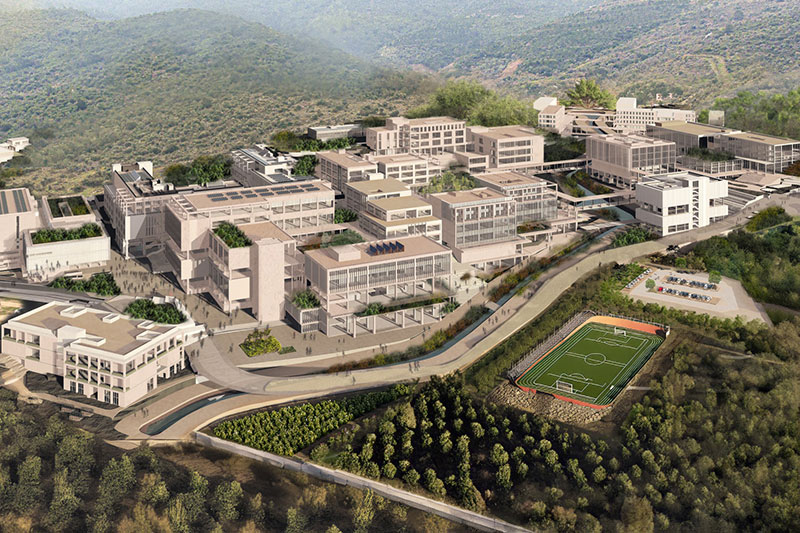
IZMIR UNIVERSITY OF ECONOMICS GÜZELBAHÇE CAMPUS
DetailsGLOBAL CAREER
As Izmir University of Economics transforms into a world-class university, it also raises successful young people with global competence.
More..CONTRIBUTION TO SCIENCE
Izmir University of Economics produces qualified knowledge and competent technologies.
More..VALUING PEOPLE
Izmir University of Economics sees producing social benefit as its reason for existence.
More..
You are one step ahead with your graduate education at Izmir University of Economics.