

- University
- Academic
- Schools/Vocational Schools
- Vocational School of Justice
- Vocational School
- Vocational School
- Department of Banking and Insurance (Turkish)
- Department of Computer Programming (Turkish)
- Department of Foreign Trade (Turkish)
- Department of Graphic Design (Turkish)
- Department of Interior Design (Turkish)
- Department of Construction Technology (Turkish)
- Department of Occupational Health and Safety (Turkish)
- Department of Media and Communication (Turkish)
- Department of Architectural Restoration (Turkish)
- Department of Radio and Tv Programming (Turkish)
- Department of Civil Aviation Cabin Services (Turkish)
- Department of Civil Aviation Transportation Management (Turkish)
- Department of Tourism and Hotel Management (Turkish)
- Department of Applied English Translation
- Vocational School Of Health Services
- Vocational School Of Health Services
- Department of Child Development (Turkish)
- Department of Physiotherapy (Turkish)
- Department of Paramedic (Turkish)
- Department of Opticianry (Turkish)
- Department of Medical Documentation and Secreteriat (Turkish)
- Department of Medical Imaging Techniques (Turkish)
- Department of Medical Laboratory Techniques (Turkish)
- Department of Elderly Care (Turkish)
- School of Applied Management Sciences
- School of Foreign Languages
- Faculties
- Faculty of Arts and Sciences
- Faculty of Fine Arts and Design
- Faculty of Law
- Faculty of Communication
- Faculty of Business
- Faculty of Engineering
- Faculty of Engineering
- Department of Computer Engineering
- Department of Biomedical Engineering
- Department of Electrical and Electronics Engineering
- Department of Industrial Engineering
- Department of Food Engineering
- Department of Genetics and Bioengineering
- Department of Aerospace Engineering
- Department of Civil Engineering
- Department of Mechanical Engineering
- Department of Mechatronics Engineering
- Department of Software Engineering
- Faculty of Health Sciences
- Medicine
- Graduate School
- Common Courses
- Schools/Vocational Schools
- Research
- Research Centers
- Library
- Smart Campus
- Technology Transfer Office
- İzmir Sciencepark
- Continuous Education Center (EKOSEM)
- Children's University
- Ethics Committee
- Teaching and Learning Center (EKOEĞİTİM)
- Psychology Application and Research Center
- Researcher Training Coordinatorship
- Research Collaborations And Innovation Coordinatorship
- Campus
- INTERNATIONAL
- Contact
- 25TH YEAR
Department of Sociology
GEIN 315 | Course Introduction and Application Information
| Course Name |
Creative Thinking
|
|
Code
|
Semester
|
Theory
(hour/week) |
Application/Lab
(hour/week) |
Local Credits
|
ECTS
|
|
GEIN 315
|
Fall/Spring
|
3
|
0
|
3
|
5
|
| Prerequisites |
None
|
|||||
| Course Language |
English
|
|||||
| Course Type |
Service Course
|
|||||
| Course Level |
First Cycle
|
|||||
| Mode of Delivery | - | |||||
| Teaching Methods and Techniques of the Course | Group WorkProblem SolvingApplication: Experiment / Laboratory / WorkshopLecture / Presentation | |||||
| National Occupation Classification | - | |||||
| Course Coordinator | ||||||
| Course Lecturer(s) | ||||||
| Assistant(s) | - | |||||
| Course Objectives | This course aims to harness and develop the innate creativity within each person using various methods, turning it into a powerful tool. It is designed to promote and develop creative thinking and problem-solving skills, addressing the need for individuals and teams to 'think outside the box' and applying fresh thinking to practical real-world problems. |
| Learning Outcomes |
The students who succeeded in this course;
|
| Course Description | This course focuses on enhancing creative thinking and problem-solving skills. It starts with understanding the nature of creativity and the traits of creative individuals. Students will learn to overcome barriers to creativity and apply lateral thinking to complex problems. The course includes practical exercises, group discussions, and real-world projects to practice creative techniques. By the end of the course, students will have a toolkit of strategies to foster creativity and innovation in various contexts. |
| Related Sustainable Development Goals |
|
|
|
Core Courses | |
| Major Area Courses | ||
| Supportive Courses | ||
| Media and Management Skills Courses | ||
| Transferable Skill Courses |
WEEKLY SUBJECTS AND RELATED PREPARATION STUDIES
| Week | Subjects | Related Preparation |
| 1 | Principles of Creative Thinking | Mihaly Csikszentmihalyi - Creativity: The Psychology of Discovery and Invention, Chapter 2: Where is Creativity? ISBN0-06-092820-4 |
| 2 | Overcoming Creative Blocks and Mindsets | |
| 3 | Lateral Thinking | Edward De Bono - Six Thinking Hats, Chapter 6: The Purpose of Six Hat Thinking, 29-31, ISBN0-14-013784-X |
| 4 | Idea Incubation and Generation | Bryan W. Mattimore, "Idea Stormers: How to Lead and Inspire Creative Breakthroughs" Chapter 2: Beyond Brainstorming: Understanding Individual and Group Ideation Techniques, 23-49 |
| 5 | Challenging Assumptions | |
| 6 | Interrogating Problems | Dan Roam, "The Back of the Napkin: Solving Problems and Selling Ideas with Pictures" Chapter 14: Why Should We Even Bother? 222-237 , ISBN 978-0-462-09947-7 |
| 7 | Kickstarting Ideas | Chris Jarez-Brown - How to have kick-ass ideas Chapter 2: The Process, 51-75, ISBN 978-0-00-722094-6 |
| 8 | Techniques and Approaches for Generating Ideas | Goldberg, Levav, Mazursky, Solomon : Cracking the Ad Code, Chapter 1: Unification, 18-41, ISBN 978-0-521-67597-0 |
| 9 | Reflective Thinking | Donald A. Schön, "The Reflective Practitioner: How Professionals Think in Action", Chapter 1: Professional Knowledge and Reflection-in-action, ISBN 1-85742-319-4 |
| 10 | Managing and Motivating Creative People | Bryan W. Mattimore, "Idea Stormers: How to Lead and Inspire Creative Breakthroughs" Chapter 1: A Map of the Creative Mind: Embracing Seven Creative Thinking Mind-Sets, 11-23 |
| 11 | Practical Application of Creative Techniques | Goldberg, Levav, Mazursky, Solomon : Cracking the Ad Code, Chapter 2: Activation, 43-62, ISBN 978-0-521-67597-0 |
| 12 | Group Work and Problem-Solving Sessions | |
| 13 | Case Studies in Creative Thinking | "Harvard Business Review on Breakthrough Thinking" Chapter 2: Spark Innovation through Empathic Design, 29-57 Chapter 4: A Film Director’s Approach to Managing Creativity, 87-117 Chapter 7: Interpretive Management: What General Managers Can Learn from Design?, 161-189 ISBN 1-57851-181-X |
| 14 | Final Project Presentation Preparation | |
| 15 | Semester Review | Review of all course materials and preparation for the final exam. |
| 16 | Final Exam | No additional materials required. |
| Course Notes/Textbooks | |
| Suggested Readings/Materials | Genrich Altschuller - Creativity as an exact science, 1984 Edward de Bono, "Lateral Thinking: Creativity Step by Step James L. Adams, "Conceptual Blockbusting: A Guide to Better Ideas” Tom Kelley and David Kelley, "Creative Confidence: Unleashing the Creative Potential Within Us All" John W. Gardner, "Self-Renewal: The Individual and the Innovative Society" Tina Seelig, "inGenius: A Crash Course on Creativity" Donald A. Schön, "The Reflective Practitioner: How Professionals Think in Action" Michael Michalko, "Thinkertoys: A Handbook of Creative-Thinking Techniques" |
EVALUATION SYSTEM
| Semester Activities | Number | Weigthing |
| Participation |
1
|
10
|
| Laboratory / Application | ||
| Field Work | ||
| Quizzes / Studio Critiques | ||
| Portfolio | ||
| Homework / Assignments |
2
|
20
|
| Presentation / Jury |
1
|
20
|
| Project |
1
|
50
|
| Seminar / Workshop | ||
| Oral Exams | ||
| Midterm | ||
| Final Exam | ||
| Total |
| Weighting of Semester Activities on the Final Grade |
50
|
|
| Weighting of End-of-Semester Activities on the Final Grade |
50
|
|
| Total |
ECTS / WORKLOAD TABLE
| Semester Activities | Number | Duration (Hours) | Workload |
|---|---|---|---|
| Theoretical Course Hours (Including exam week: 16 x total hours) |
16
|
3
|
48
|
| Laboratory / Application Hours |
16
|
0
|
|
| Study Hours Out of Class |
14
|
3
|
42
|
| Field Work |
0
|
||
| Quizzes / Studio Critiques |
0
|
||
| Portfolio |
0
|
||
| Homework / Assignments |
2
|
15
|
30
|
| Presentation / Jury |
1
|
18
|
18
|
| Project |
1
|
30
|
30
|
| Seminar / Workshop |
0
|
||
| Oral Exam |
0
|
||
| Midterms |
0
|
||
| Final Exam |
0
|
||
| Total |
168
|
COURSE LEARNING OUTCOMES AND PROGRAM QUALIFICATIONS RELATIONSHIP
|
#
|
Program Competencies/Outcomes |
* Contribution Level
|
|||||
|
1
|
2
|
3
|
4
|
5
|
|||
| 1 |
To have the knowledge of classical and contemporary theories in sociology, and be able to comparatively analyze these theories. |
-
|
-
|
-
|
-
|
-
|
|
| 2 |
To have the knowledge of main methodological approaches in sociology as well as social research and data analysis methods. |
-
|
-
|
-
|
-
|
-
|
|
| 3 |
To have knowledge in the fields of general sociology, sociology of institutions, social structure and change, and applied sociology. |
-
|
-
|
-
|
-
|
-
|
|
| 4 |
To be able to determine the appropriate methods in the design of the planning stage and conclusion of a sociological project, individually or as part of a team. |
-
|
-
|
-
|
-
|
-
|
|
| 5 |
To be able to diagnose the social dynamics behind personal problems by using sociological imagination. |
-
|
-
|
-
|
-
|
-
|
|
| 6 |
To be able to define social problems at local, national, and global level, and offer new policies for solutions. |
-
|
-
|
-
|
-
|
-
|
|
| 7 |
To be able to apply commonly-used computer programs for data collection and analysis in sociological research. |
-
|
-
|
-
|
-
|
-
|
|
| 8 |
To be able to develop a socially responsible, scientific and ethical perspective regarding the collection, analysis, interpretation and presentation of data. |
-
|
-
|
-
|
-
|
-
|
|
| 9 |
To be able to analyze different aspects of the social world by drawing on the knowledge produced by other disciplines of the social sciences. |
-
|
-
|
-
|
-
|
-
|
|
| 10 |
To be able to constantly renew herself/himself professionally by following scientific and technological developments in sociology and social research. |
-
|
-
|
-
|
-
|
-
|
|
| 11 |
To be able to collect sociological data and communicate with sociologists and other social scientists in a foreign language ("European Language Portfolio Global Scale", Level B1). |
-
|
-
|
-
|
-
|
-
|
|
| 12 |
To be able to speak a second foreign at a medium level of fluency efficiently. |
-
|
-
|
-
|
-
|
-
|
|
| 13 |
To be able to relate the knowledge accumulated throughout the human history to their field of expertise. |
-
|
-
|
-
|
-
|
-
|
|
*1 Lowest, 2 Low, 3 Average, 4 High, 5 Highest


NEWSALL NEWS



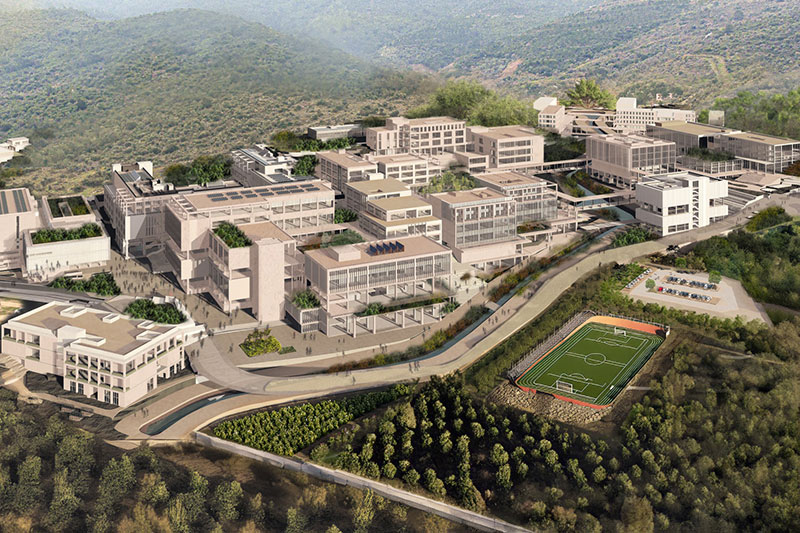
IZMIR UNIVERSITY OF ECONOMICS GÜZELBAHÇE CAMPUS
DetailsGLOBAL CAREER
As Izmir University of Economics transforms into a world-class university, it also raises successful young people with global competence.
More..CONTRIBUTION TO SCIENCE
Izmir University of Economics produces qualified knowledge and competent technologies.
More..VALUING PEOPLE
Izmir University of Economics sees producing social benefit as its reason for existence.
More..
You are one step ahead with your graduate education at Izmir University of Economics.