

- University
- Academic
- Schools/Vocational Schools
- Vocational School of Justice
- Vocational School
- Vocational School
- Department of Banking and Insurance (Turkish)
- Department of Computer Programming (Turkish)
- Department of Foreign Trade (Turkish)
- Department of Graphic Design (Turkish)
- Department of Interior Design (Turkish)
- Department of Construction Technology (Turkish)
- Department of Occupational Health and Safety (Turkish)
- Department of Media and Communication (Turkish)
- Department of Architectural Restoration (Turkish)
- Department of Radio and Tv Programming (Turkish)
- Department of Civil Aviation Cabin Services (Turkish)
- Department of Civil Aviation Transportation Management (Turkish)
- Department of Tourism and Hotel Management (Turkish)
- Department of Applied English Translation
- Vocational School Of Health Services
- Vocational School Of Health Services
- Department of Child Development (Turkish)
- Department of Physiotherapy (Turkish)
- Department of Paramedic (Turkish)
- Department of Opticianry (Turkish)
- Department of Medical Documentation and Secreteriat (Turkish)
- Department of Medical Imaging Techniques (Turkish)
- Department of Medical Laboratory Techniques (Turkish)
- Department of Elderly Care (Turkish)
- School of Applied Management Sciences
- School of Foreign Languages
- Faculties
- Faculty of Arts and Sciences
- Faculty of Fine Arts and Design
- Faculty of Law
- Faculty of Communication
- Faculty of Business
- Faculty of Engineering
- Faculty of Engineering
- Department of Computer Engineering
- Department of Biomedical Engineering
- Department of Electrical and Electronics Engineering
- Department of Industrial Engineering
- Department of Food Engineering
- Department of Genetics and Bioengineering
- Department of Aerospace Engineering
- Department of Civil Engineering
- Department of Mechanical Engineering
- Department of Mechatronics Engineering
- Department of Software Engineering
- Faculty of Health Sciences
- Medicine
- Graduate School
- Common Courses
- Schools/Vocational Schools
- Research
- Research Centers
- Library
- Smart Campus
- Technology Transfer Office
- İzmir Sciencepark
- Continuous Education Center (EKOSEM)
- Children's University
- Ethics Committee
- Teaching and Learning Center (EKOEĞİTİM)
- Psychology Application and Research Center
- Researcher Training Coordinatorship
- Research Collaborations And Innovation Coordinatorship
- Campus
- INTERNATIONAL
- Contact
- 25TH YEAR
Department of Sociology
SOC 337 | Course Introduction and Application Information
| Course Name |
Sociology of Crime
|
|
Code
|
Semester
|
Theory
(hour/week) |
Application/Lab
(hour/week) |
Local Credits
|
ECTS
|
|
SOC 337
|
Fall/Spring
|
3
|
0
|
3
|
6
|
| Prerequisites |
None
|
|||||
| Course Language |
English
|
|||||
| Course Type |
Elective
|
|||||
| Course Level |
First Cycle
|
|||||
| Mode of Delivery | - | |||||
| Teaching Methods and Techniques of the Course | DiscussionCase StudyQ&ACritical feedbackField trip / ObservationLecture / Presentation | |||||
| National Occupation Classification | - | |||||
| Course Coordinator | ||||||
| Course Lecturer(s) | ||||||
| Assistant(s) | - | |||||
| Course Objectives | To analyze fundamental debates about the social origins and outcomes of crime via the major theoretical debates in criminology . |
| Learning Outcomes |
The students who succeeded in this course;
|
| Course Description | Criminology deals, scientifically, with the topics of crime and deviant behavior. It primarily attempts to situate the crime and deviant behavior into historical and theoretical context in order to reveal out the answers for questions such as: Why do people commit crime? What are the resons and consequences of criminal behaviour? What kind of typologies of crime can we observe in different societies?This class, in this respect, attempts to investigate the answers of these questions in relation to major criminology theories by highlighting major categories such as class, age, race, ethnicity, gender, violence, political and organized crimes. |
| Related Sustainable Development Goals |

|
|
|
Core Courses | |
| Major Area Courses |
X
|
|
| Supportive Courses | ||
| Media and Management Skills Courses | ||
| Transferable Skill Courses |
WEEKLY SUBJECTS AND RELATED PREPARATION STUDIES
| Week | Subjects | Related Preparation |
| 1 | What Is Crime? Crime, Deviance, and Social Construction | Bhowmik, Subhranil. (2023). The Evolution of Crime: The Dynamic Definition of Crime as per Society. International Journal of Law Management & Humanities, 6, 3638-3689. Supplementary: OpenStax, Introduction to Sociology 3e, §§7.1–7.2. |
| 2 | Functionalism, Anomie, and Strain | Landis & Scarpitti (1965), “Perceptions Regarding Value Orientation and Legitimate Opportunity: Delinquents and Non-Delinquents,” Social Forces 44(1): 83–91, doi:10.2307/2574825; DiCristina (2016), “Durkheim’s Theory of Anomie and Crime,” 311–331, doi:10.1177/0004865815585391. Supplementary: OpenStax §7.2, functionalism and strain theory. |
| 3 | Interactionism, Labelling, and Social Disorganization | Jón Gunnar Bernburg (2009), “Labeling Theory,” in Handbook on Crime and Deviance, 187–207, doi:10.1007/978-1-4419-0245-0_10; Barmaki (2019), “On the Origin of ‘Labeling’ Theory in Criminology,” 256–271, doi:10.1080/01639625.2017.1420491. |
| 4 | Conflict and Control Theories | Paul Walton (1998), “Big Science,” 1–13; Donald R. Cressey (1979), “Fifty Years of Criminology,” 457–480. |
| 5 | Crime, Community, and Morality — Case: Drug Trade | Simon Green (2014), Crime, Community and Morality, 11–35. Routledge e-book ISBN 9781315885650. |
| 6 | Hate Crime — Case: Refugees and Immigrants | Neil Chakraborti (2015), “Re-thinking Hate Crime: Fresh Challenges for Policy and Practice,” 1738–1754; Clara S. Lewis (2009), “Contrary Condemnation: Mainstream Television News Coverage of Hate Crime, 1991–2007,” instructor-supplied manuscript. Supplementary: OSCE/ODIHR, Hate Crime Laws, selected pages; Shanks-Meile (1999), review of Jenness and Broad; Council of Europe overview. |
| 7 | Punishment and Imprisonment | Jeffrey Ian Ross, ed. (2013), The Globalization of Supermax Prisons, 9–27 and 163–177. Rutgers University Press, ISBN 9780813557410. |
| 8 | Midterm | |
| 9 | Surveillance and Governance: Crime Control and Beyond | Mathieu Deflem, ed. (2008), Surveillance and Governance: Crime Control and Beyond, Sociology of Crime, Law and Deviance, vol. 10; specific chapter/pages supplied through the LMS. Supplementary: Sarah Brayne (2017), “Big Data Surveillance: The Case of Policing,” 977–1008, doi:10.1177/0003122417725865. |
| 10 | Film Lab: Prediction, Evidence, and Pre-crime | Minority Report (dir. Steven Spielberg, 2002). Supplementary: Revisit Brayne (2017), 995–1003. |
| 11 | Women as Victims and Offenders | Anne Worrall (1990), Offending Women: Female Lawbreakers and the Criminal Justice System, 42–62. Routledge. |
| 12 | Animals, Victimhood, and Green Criminology | Keri B. Burchfield (2018), “The Nature of Animal Crime: Scope and Severity in Chicago,” Crime & Delinquency 64(14): 1904–1924, doi:10.1177/0011128717719515 |
| 13 | White-Collar Crime — Crime in the Office | John Braithwaite (1985), “White Collar Crime,” 1–25. Supplementary: OpenStax §7.3, corporate crime. |
| 14 | Modern Serial Killers, Media, and Classification | Kevin D. Haggerty (2009), “Modern Serial Killers,” 168–187. |
| 15 | Course Review and Theoretical Synthesis | |
| 16 | Final |
| Course Notes/Textbooks | - |
| Suggested Readings/Materials |
|
EVALUATION SYSTEM
| Semester Activities | Number | Weigthing |
| Participation | ||
| Laboratory / Application | ||
| Field Work | ||
| Quizzes / Studio Critiques | ||
| Portfolio | ||
| Homework / Assignments | ||
| Presentation / Jury | ||
| Project | ||
| Seminar / Workshop | ||
| Oral Exams | ||
| Midterm |
1
|
40
|
| Final Exam |
1
|
60
|
| Total |
| Weighting of Semester Activities on the Final Grade |
1
|
40
|
| Weighting of End-of-Semester Activities on the Final Grade |
1
|
60
|
| Total |
ECTS / WORKLOAD TABLE
| Semester Activities | Number | Duration (Hours) | Workload |
|---|---|---|---|
| Theoretical Course Hours (Including exam week: 16 x total hours) |
16
|
3
|
48
|
| Laboratory / Application Hours |
16
|
0
|
|
| Study Hours Out of Class |
15
|
3
|
45
|
| Field Work |
0
|
||
| Quizzes / Studio Critiques |
0
|
||
| Portfolio |
0
|
||
| Homework / Assignments |
0
|
||
| Presentation / Jury |
0
|
||
| Project |
0
|
||
| Seminar / Workshop |
0
|
||
| Oral Exam |
0
|
||
| Midterms |
1
|
37
|
37
|
| Final Exam |
1
|
50
|
50
|
| Total |
180
|
COURSE LEARNING OUTCOMES AND PROGRAM QUALIFICATIONS RELATIONSHIP
|
#
|
Program Competencies/Outcomes |
* Contribution Level
|
|||||
|
1
|
2
|
3
|
4
|
5
|
|||
| 1 |
To have the knowledge of classical and contemporary theories in sociology, and be able to comparatively analyze these theories. |
X
|
-
|
-
|
-
|
-
|
|
| 2 |
To have the knowledge of main methodological approaches in sociology as well as social research and data analysis methods. |
X
|
-
|
-
|
-
|
-
|
|
| 3 |
To have knowledge in the fields of general sociology, sociology of institutions, social structure and change, and applied sociology. |
X
|
-
|
-
|
-
|
-
|
|
| 4 |
To be able to determine the appropriate methods in the design of the planning stage and conclusion of a sociological project, individually or as part of a team. |
-
|
-
|
X
|
-
|
-
|
|
| 5 |
To be able to diagnose the social dynamics behind personal problems by using sociological imagination. |
X
|
-
|
-
|
-
|
-
|
|
| 6 |
To be able to define social problems at local, national, and global level, and offer new policies for solutions. |
-
|
-
|
X
|
-
|
-
|
|
| 7 |
To be able to apply commonly-used computer programs for data collection and analysis in sociological research. |
-
|
-
|
X
|
-
|
-
|
|
| 8 |
To be able to develop a socially responsible, scientific and ethical perspective regarding the collection, analysis, interpretation and presentation of data. |
-
|
-
|
-
|
-
|
-
|
|
| 9 |
To be able to analyze different aspects of the social world by drawing on the knowledge produced by other disciplines of the social sciences. |
-
|
-
|
-
|
-
|
-
|
|
| 10 |
To be able to constantly renew herself/himself professionally by following scientific and technological developments in sociology and social research. |
-
|
-
|
-
|
-
|
-
|
|
| 11 |
To be able to collect sociological data and communicate with sociologists and other social scientists in a foreign language ("European Language Portfolio Global Scale", Level B1). |
-
|
-
|
-
|
-
|
-
|
|
| 12 |
To be able to speak a second foreign at a medium level of fluency efficiently. |
-
|
-
|
-
|
-
|
-
|
|
| 13 |
To be able to relate the knowledge accumulated throughout the human history to their field of expertise. |
-
|
-
|
-
|
-
|
-
|
|
*1 Lowest, 2 Low, 3 Average, 4 High, 5 Highest


NEWSALL NEWS



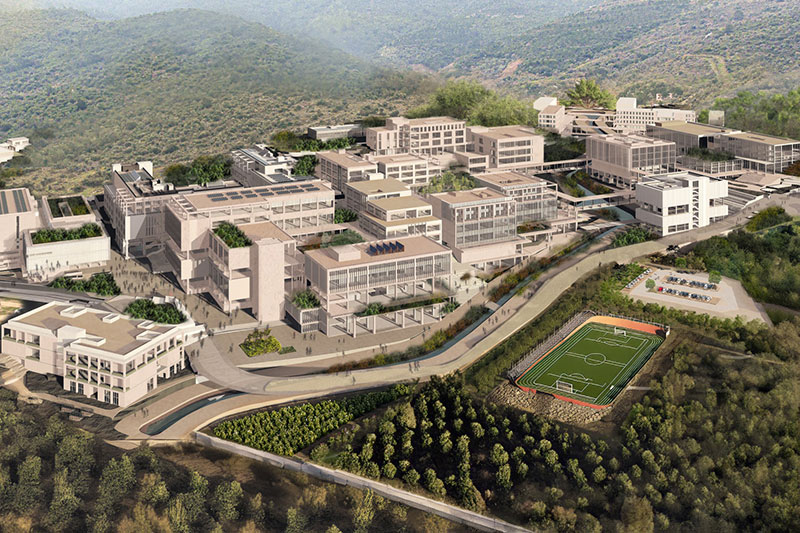
IZMIR UNIVERSITY OF ECONOMICS GÜZELBAHÇE CAMPUS
DetailsGLOBAL CAREER
As Izmir University of Economics transforms into a world-class university, it also raises successful young people with global competence.
More..CONTRIBUTION TO SCIENCE
Izmir University of Economics produces qualified knowledge and competent technologies.
More..VALUING PEOPLE
Izmir University of Economics sees producing social benefit as its reason for existence.
More..
You are one step ahead with your graduate education at Izmir University of Economics.