

- University
- Academic
- Schools/Vocational Schools
- Vocational School of Justice
- Vocational School
- Vocational School
- Department of Banking and Insurance (Turkish)
- Department of Computer Programming (Turkish)
- Department of Foreign Trade (Turkish)
- Department of Graphic Design (Turkish)
- Department of Interior Design (Turkish)
- Department of Construction Technology (Turkish)
- Department of Occupational Health and Safety (Turkish)
- Department of Media and Communication (Turkish)
- Department of Architectural Restoration (Turkish)
- Department of Radio and Tv Programming (Turkish)
- Department of Civil Aviation Cabin Services (Turkish)
- Department of Civil Aviation Transportation Management (Turkish)
- Department of Tourism and Hotel Management (Turkish)
- Department of Applied English Translation
- Vocational School Of Health Services
- Vocational School Of Health Services
- Department of Child Development (Turkish)
- Department of Physiotherapy (Turkish)
- Department of Paramedic (Turkish)
- Department of Opticianry (Turkish)
- Department of Medical Documentation and Secreteriat (Turkish)
- Department of Medical Imaging Techniques (Turkish)
- Department of Medical Laboratory Techniques (Turkish)
- Department of Elderly Care (Turkish)
- School of Applied Management Sciences
- School of Foreign Languages
- Faculties
- Faculty of Arts and Sciences
- Faculty of Fine Arts and Design
- Faculty of Law
- Faculty of Communication
- Faculty of Business
- Faculty of Engineering
- Faculty of Engineering
- Department of Computer Engineering
- Department of Biomedical Engineering
- Department of Electrical and Electronics Engineering
- Department of Industrial Engineering
- Department of Food Engineering
- Department of Genetics and Bioengineering
- Department of Aerospace Engineering
- Department of Civil Engineering
- Department of Mechanical Engineering
- Department of Mechatronics Engineering
- Department of Software Engineering
- Faculty of Health Sciences
- Medicine
- Graduate School
- Common Courses
- Schools/Vocational Schools
- Research
- Research Centers
- Library
- Smart Campus
- Technology Transfer Office
- İzmir Sciencepark
- Continuous Education Center (EKOSEM)
- Children's University
- Ethics Committee
- Teaching and Learning Center (EKOEĞİTİM)
- Psychology Application and Research Center
- Researcher Training Coordinatorship
- Research Collaborations And Innovation Coordinatorship
- Campus
- INTERNATIONAL
- Contact
- 25TH YEAR
Department of Sociology
SOC 339 | Course Introduction and Application Information
| Course Name |
Education and Society
|
|
Code
|
Semester
|
Theory
(hour/week) |
Application/Lab
(hour/week) |
Local Credits
|
ECTS
|
|
SOC 339
|
Fall/Spring
|
3
|
0
|
3
|
6
|
| Prerequisites |
None
|
|||||
| Course Language |
English
|
|||||
| Course Type |
Elective
|
|||||
| Course Level |
First Cycle
|
|||||
| Mode of Delivery | - | |||||
| Teaching Methods and Techniques of the Course | Q&ALecture / Presentation | |||||
| National Occupation Classification | - | |||||
| Course Coordinator | - | |||||
| Course Lecturer(s) | - | |||||
| Assistant(s) | - | |||||
| Course Objectives | The aim of this course is to introduce students to the sociological perspectives and theoretical frameworks within the field of educational sociology. The aim of this course is to introduce students to the sociological perspectives and theoretical frameworks within the field of educational sociology. The aim of this course is to introduce students to the sociological perspectives and theoretical frameworks within the field of educational sociology. |
| Learning Outcomes |
The students who succeeded in this course;
|
| Course Description | The course is designed to examine the phenomenon of education through a sociological thinking. To do this, by evaluating key concepts and theoretical debates in the field of educational sociology, the course focuses on subjects such as the relationship between education and society, educational institutions, policies, and ideologies, as well as the role of education in reproducing social inequalities and addressing contemporary issues in education. |
| Related Sustainable Development Goals |
|
|
|
Core Courses | |
| Major Area Courses |
X
|
|
| Supportive Courses | ||
| Media and Management Skills Courses | ||
| Transferable Skill Courses |
WEEKLY SUBJECTS AND RELATED PREPARATION STUDIES
| Week | Subjects | Related Preparation |
| 1 | Introduction | |
| 2 | Theoretical Perspectives in Sociology of Education | Susan L. Robertson. (2010). “Spatializing’ the sociology of education: stand-points, entry-points and vantage-points”, chap 1 in The Routledge International Handbook of the Sociology of Education. (New York: Routledge). |
| 3 | Education and Power | Inés Dussel. (2010). “Foucault and education”, chap 2 in The Routledge International Handbook of the Sociology of Education. (New York: Routledge). |
| 4 | Pedagogy and Knowledge | Ursula Hoadley and Johan Muller (2010). “Codes, pedagogy and knowledge: advances in Bernsteinian sociology of education”, chap 6 in The Routledge International Handbook of the Sociology of Education. (New York: Routledge). |
| 5 | Education and Modernity | Philip A. Woods. (2010). “Rationalisation, disenchantment and re-enchantment: engaging with Weber’s sociology of modernity, chap 11 in The Routledge International Handbook of the Sociology of Education. (New York: Routledge). |
| 6 | Gender, Subjectivities and Education | Deborah Youdell. (2010). “Recognizing the subjects of education: engagements with Judith Butler”, chap 12 in The Routledge International Handbook of the Sociology of Education. (New York: Routledge). |
| 7 | Gendered Labor in Education | Michael W. Apple. (2010). “Doing the work of God: home schooling and gendered labor”, chap 13 in The Routledge International Handbook of the Sociology of Education. (New York: Routledge). |
| 8 | Midterm | |
| 9 | Social Democracy and Education | Mark Olssen. (2010). Social democracy, complexity and education: sociological perspectives from welfare liberalism”, chap 7 in The Routledge International Handbook of the Sociology of Education. (New York: Routledge). |
| 10 | Education and Ideologies | Stephen J. Ball. (2010). “ New states, new governance and new education policy”, chap 14 in The Routledge International Handbook of the Sociology of Education. (New York: Routledge). |
| 11 | Social Reproduction and Education | Andrew Brantlinger, Laurel Cooley and Ellen Brantlinger. (2010). “Families, values, and class relations: the politics of alternative certification”, chap 16 in The Routledge International Handbook of the Sociology of Education. (New York: Routledge). |
| 12 | Social Class and Education | Maria Alice Nogueira. (2010). “A revisited theme – middle classes and the school”, chap 22 in The Routledge International Handbook of the Sociology of Education. (New York: Routledge). |
| 13 | Ethnicity and Education | Kris D. Gutiérrez, Arshad Ali and Cecilia Henríquez. (2010). “Syncretism and hybridity: schooling, language, and race and students from non-dominant communities”, chap 32 in The Routledge International Handbook of the Sociology of Education. (New York: Routledge). |
| 14 | Critical Pedagogy, Resistance and Education | Ramón Flecha. (2010). “The dialogic sociology of the learning communities”, chap 30 in The Routledge International Handbook of the Sociology of Education. (New York: Routledge). |
| 15 | Semester Review | |
| 16 | Final Exam |
| Course Notes/Textbooks |
|
|
| Suggested Readings/Materials |
EVALUATION SYSTEM
| Semester Activities | Number | Weigthing |
| Participation |
1
|
10
|
| Laboratory / Application | ||
| Field Work | ||
| Quizzes / Studio Critiques | ||
| Portfolio | ||
| Homework / Assignments | ||
| Presentation / Jury | ||
| Project | ||
| Seminar / Workshop | ||
| Oral Exams | ||
| Midterm |
1
|
40
|
| Final Exam |
1
|
50
|
| Total |
| Weighting of Semester Activities on the Final Grade |
2
|
50
|
| Weighting of End-of-Semester Activities on the Final Grade |
1
|
50
|
| Total |
ECTS / WORKLOAD TABLE
| Semester Activities | Number | Duration (Hours) | Workload |
|---|---|---|---|
| Theoretical Course Hours (Including exam week: 16 x total hours) |
16
|
3
|
48
|
| Laboratory / Application Hours |
16
|
0
|
|
| Study Hours Out of Class |
14
|
3
|
42
|
| Field Work |
0
|
||
| Quizzes / Studio Critiques |
0
|
||
| Portfolio |
0
|
||
| Homework / Assignments |
0
|
||
| Presentation / Jury |
0
|
||
| Project |
0
|
||
| Seminar / Workshop |
0
|
||
| Oral Exam |
0
|
||
| Midterms |
1
|
40
|
40
|
| Final Exam |
1
|
50
|
50
|
| Total |
180
|
COURSE LEARNING OUTCOMES AND PROGRAM QUALIFICATIONS RELATIONSHIP
|
#
|
Program Competencies/Outcomes |
* Contribution Level
|
|||||
|
1
|
2
|
3
|
4
|
5
|
|||
| 1 |
To have the knowledge of classical and contemporary theories in sociology, and be able to comparatively analyze these theories. |
-
|
-
|
X
|
-
|
-
|
|
| 2 |
To have the knowledge of main methodological approaches in sociology as well as social research and data analysis methods. |
-
|
-
|
X
|
-
|
-
|
|
| 3 |
To have knowledge in the fields of general sociology, sociology of institutions, social structure and change, and applied sociology. |
-
|
-
|
X
|
-
|
-
|
|
| 4 |
To be able to determine the appropriate methods in the design of the planning stage and conclusion of a sociological project, individually or as part of a team. |
-
|
-
|
-
|
-
|
-
|
|
| 5 |
To be able to diagnose the social dynamics behind personal problems by using sociological imagination. |
-
|
-
|
X
|
-
|
-
|
|
| 6 |
To be able to define social problems at local, national, and global level, and offer new policies for solutions. |
-
|
-
|
-
|
-
|
-
|
|
| 7 |
To be able to apply commonly-used computer programs for data collection and analysis in sociological research. |
-
|
-
|
-
|
-
|
-
|
|
| 8 |
To be able to develop a socially responsible, scientific and ethical perspective regarding the collection, analysis, interpretation and presentation of data. |
-
|
-
|
-
|
-
|
-
|
|
| 9 |
To be able to analyze different aspects of the social world by drawing on the knowledge produced by other disciplines of the social sciences. |
-
|
-
|
X
|
-
|
-
|
|
| 10 |
To be able to constantly renew herself/himself professionally by following scientific and technological developments in sociology and social research. |
-
|
-
|
-
|
-
|
-
|
|
| 11 |
To be able to collect sociological data and communicate with sociologists and other social scientists in a foreign language ("European Language Portfolio Global Scale", Level B1). |
-
|
-
|
-
|
-
|
-
|
|
| 12 |
To be able to speak a second foreign at a medium level of fluency efficiently. |
-
|
-
|
-
|
-
|
-
|
|
| 13 |
To be able to relate the knowledge accumulated throughout the human history to their field of expertise. |
-
|
-
|
-
|
-
|
-
|
|
*1 Lowest, 2 Low, 3 Average, 4 High, 5 Highest


NEWSALL NEWS



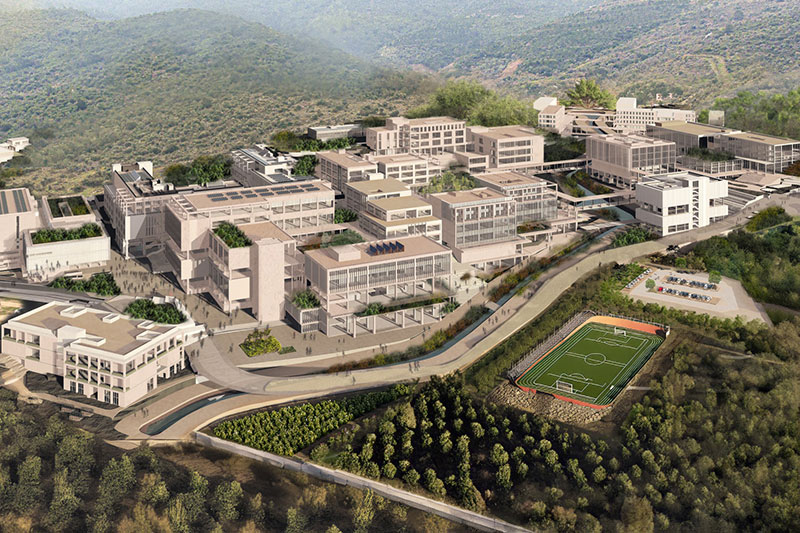
IZMIR UNIVERSITY OF ECONOMICS GÜZELBAHÇE CAMPUS
DetailsGLOBAL CAREER
As Izmir University of Economics transforms into a world-class university, it also raises successful young people with global competence.
More..CONTRIBUTION TO SCIENCE
Izmir University of Economics produces qualified knowledge and competent technologies.
More..VALUING PEOPLE
Izmir University of Economics sees producing social benefit as its reason for existence.
More..
You are one step ahead with your graduate education at Izmir University of Economics.