


- University
- Academic
- Schools/Vocational Schools
- Vocational School of Justice
- Vocational School
- Vocational School
- Department of Banking and Insurance (Turkish)
- Department of Computer Programming (Turkish)
- Department of Foreign Trade (Turkish)
- Department of Graphic Design (Turkish)
- Department of Interior Design (Turkish)
- Department of Construction Technology (Turkish)
- Department of Occupational Health and Safety (Turkish)
- Department of Media and Communication (Turkish)
- Department of Architectural Restoration (Turkish)
- Department of Radio and Tv Programming (Turkish)
- Department of Civil Aviation Cabin Services (Turkish)
- Department of Civil Aviation Transportation Management (Turkish)
- Department of Tourism and Hotel Management (Turkish)
- Department of Applied English Translation
- Vocational School Of Health Services
- Vocational School Of Health Services
- Department of Child Development (Turkish)
- Department of Physiotherapy (Turkish)
- Department of Paramedic (Turkish)
- Department of Opticianry (Turkish)
- Department of Medical Documentation and Secreteriat (Turkish)
- Department of Medical Imaging Techniques (Turkish)
- Department of Medical Laboratory Techniques (Turkish)
- Department of Elderly Care (Turkish)
- School of Applied Management Sciences
- School of Foreign Languages
- Faculties
- Faculty of Arts and Sciences
- Faculty of Fine Arts and Design
- Faculty of Law
- Faculty of Communication
- Faculty of Business
- Faculty of Engineering
- Faculty of Engineering
- Department of Computer Engineering
- Department of Biomedical Engineering
- Department of Electrical and Electronics Engineering
- Department of Industrial Engineering
- Department of Food Engineering
- Department of Genetics and Bioengineering
- Department of Aerospace Engineering
- Department of Civil Engineering
- Department of Mechanical Engineering
- Department of Mechatronics Engineering
- Department of Software Engineering
- Faculty of Health Sciences
- Medicine
- Graduate School
- Common Courses
- Schools/Vocational Schools
- Research
- Research Centers
- Library
- Smart Campus
- Technology Transfer Office
- İzmir Sciencepark
- Continuous Education Center (EKOSEM)
- Children's University
- Ethics Committee
- Teaching and Learning Center (EKOEĞİTİM)
- Psychology Application and Research Center
- Researcher Training Coordinatorship
- Research Collaborations And Innovation Coordinatorship
- Campus
- INTERNATIONAL
- Contact
- 25TH YEAR
Department of Sociology
SOC 345 | Course Introduction and Application Information
| Course Name |
Sociology of Work
|
|
Code
|
Semester
|
Theory
(hour/week) |
Application/Lab
(hour/week) |
Local Credits
|
ECTS
|
|
SOC 345
|
Fall/Spring
|
3
|
0
|
3
|
6
|
| Prerequisites |
None
|
|||||
| Course Language |
English
|
|||||
| Course Type |
Elective
|
|||||
| Course Level |
First Cycle
|
|||||
| Mode of Delivery | - | |||||
| Teaching Methods and Techniques of the Course | DiscussionLecture / Presentation | |||||
| National Occupation Classification | - | |||||
| Course Coordinator | - | |||||
| Course Lecturer(s) | ||||||
| Assistant(s) | - | |||||
| Course Objectives | This course is an introduction to the sociology of work that will explore the organization and management of work and contemporary transformations in ways that people experience work and employment. |
| Learning Outcomes |
The students who succeeded in this course;
|
| Course Description | This course provides a sociological perspective to work. Work is a defining activity on the lives of human beings. The course will take account of how different types of work and workers are connected worldwide. We will first start with historical background and theories and then explore the issues of labor control, globalization, flexibility, precarity, service labor, gender, and current trends such as employment conditions in the digital age. The course introduces discussion on the issue of gig economy and complements this with a cinematic representation of the theme exploring the issues of time, family, and work-life balance in the 21st century. |
| Related Sustainable Development Goals |

|
|
|
Core Courses | |
| Major Area Courses |
X
|
|
| Supportive Courses | ||
| Media and Management Skills Courses | ||
| Transferable Skill Courses |
WEEKLY SUBJECTS AND RELATED PREPARATION STUDIES
| Week | Subjects | Related Preparation |
| 1 | Introduction to course | |
| 2 | The development of the sociology of work | Tim Strangelman. “The Disciplinary Career of the Sociology of Work” in The Sage Handbook of Work and Employment. 2016. Stephen Edgell et al. (eds.) |
| 3 | Bureaucracies and Management | Charles Heckscher. “From Bureaucracy to Networks” in The Sage Handbook of Work and Employment. 2016. Stephen Edgell et al. (eds.) Leo McCann, “From Management to Leadership” in The Sage Handbook of Work and Employment. 2016. Stephen Edgell et al. (eds.) |
| 4 | Taylorism | “Scientific management,” Frederick Taylor. In Fischer and Sirianni, Critical Studies, chap. 4. “The real meaning of Taylorism,” Harry Braverman. In Fischer and Sirianni, Critical Studies, chapter 5. |
| 5 | Labor control | “Forms of control in the labor process: An historical analysis,” Richard Edwards. In Fischer and Sirianni, Critical Studies, chapter 8. “Organizing Consent on the Shop Floor: the Game of Making Out,” Michael Burawoy. In Fischer and Sirianni, Critical Studies, chapter 10. |
| 6 | Workplace regimes | Michael Burawoy (1985). Politics of Production, Verso. selected chapters. Thompson and van den Broek. 2010. “Managerial control and workplace regimes: an introduction” Work, Employment and Society. vol. 24, no. 3, pp. 1-12. |
| 7 | Resistance in the workplace | Aykroyd and Thompson. “Unruly Subjects. Misbehavior in the Workplace” in The Sage Handbook of Work and Employment. 2016. Stephen Edgell et al. (eds.) |
| 8 | Transformation of employment relations | Arne Kalleberg, “Good Jobs, Bad Jobs.” The Sage Handbook of Work and Employment. 2016. Stephen Edgell et al. (eds.) Arne Kalleberg, “Precarious Work, Insecure Workers: Employment Relations in Transition,” American Sociological Review, vol. 74, no. 1, pp. 1-22. |
| 9 | Midterm week | |
| 10 | Labor control in the service sector | Hochschild, Arlie 1983/2003. “Feeling Management. From Private to Commercial Uses” in The Managed Heart: commercialization of human feeling. University of California Press, pp. 89-136. Marek Korczynski, “Understanding the Contradictory Lived Experience of Service Work,” In Service Work. Critical Perspectives. Eds. Marek Korczynski and Cameron Lynn Macdonald, 2009, Routledge, pp. 73-90. Jenkins et al. (2010). “Emotional management in a mass customised call centre: examining skill and knowledgeability in interactive service work”. Work, Employment and Society. |
| 11 | Labor control in the service sector | Continued |
| 12 | Human resource management | Tom Redman and Adrian Wilkinson, “Human Resource Management: A Contemporary Perspective,” In Contemporary Human Resource Management (2nd ed.), 2006, London: Prentice Hall, pp. 3-25. |
| 13 | Gender in business organizations | Acker, Joan. 1990. “Hierarchies, Jobs, Bodies: A Theory of Gendered Organizations,” Gender & Society, 4 139-158. Harriet Bradley. “Gender and Work” The Sage Handbook of Work and Employment. 2016. Stephen Edgell et al. (eds.) |
| 14 | Gender, race and work | Evelyn Nakano Glenn. “Race, Racialization and Work.” The Sage Handbook of Work and Employment. 2016. Stephen Edgell et al. (eds.) |
| 15 | Review of the semester | |
| 16 | Final Exam |
| Course Notes/Textbooks | Stephen Edgell et al. (2016). The SAGE Handbook of the Sociology of Work and Employment. London: Sage. Print ISBN:9781446280669 Online ISBN:9781473915206
|
| Suggested Readings/Materials |
EVALUATION SYSTEM
| Semester Activities | Number | Weigthing |
| Participation | ||
| Laboratory / Application | ||
| Field Work | ||
| Quizzes / Studio Critiques |
1
|
20
|
| Portfolio | ||
| Homework / Assignments | ||
| Presentation / Jury | ||
| Project | ||
| Seminar / Workshop | ||
| Oral Exams | ||
| Midterm |
1
|
40
|
| Final Exam |
1
|
40
|
| Total |
| Weighting of Semester Activities on the Final Grade |
2
|
60
|
| Weighting of End-of-Semester Activities on the Final Grade |
1
|
40
|
| Total |
ECTS / WORKLOAD TABLE
| Semester Activities | Number | Duration (Hours) | Workload |
|---|---|---|---|
| Theoretical Course Hours (Including exam week: 16 x total hours) |
16
|
3
|
48
|
| Laboratory / Application Hours |
16
|
0
|
|
| Study Hours Out of Class |
15
|
3
|
45
|
| Field Work |
0
|
||
| Quizzes / Studio Critiques |
1
|
17
|
17
|
| Portfolio |
0
|
||
| Homework / Assignments |
0
|
||
| Presentation / Jury |
0
|
||
| Project |
0
|
||
| Seminar / Workshop |
0
|
||
| Oral Exam |
0
|
||
| Midterms |
1
|
30
|
30
|
| Final Exam |
1
|
40
|
40
|
| Total |
180
|
COURSE LEARNING OUTCOMES AND PROGRAM QUALIFICATIONS RELATIONSHIP
|
#
|
Program Competencies/Outcomes |
* Contribution Level
|
|||||
|
1
|
2
|
3
|
4
|
5
|
|||
| 1 |
To have the knowledge of classical and contemporary theories in sociology, and be able to comparatively analyze these theories. |
X
|
-
|
-
|
-
|
-
|
|
| 2 |
To have the knowledge of main methodological approaches in sociology as well as social research and data analysis methods. |
-
|
-
|
-
|
-
|
-
|
|
| 3 |
To have knowledge in the fields of general sociology, sociology of institutions, social structure and change, and applied sociology. |
-
|
X
|
-
|
-
|
-
|
|
| 4 |
To be able to determine the appropriate methods in the design of the planning stage and conclusion of a sociological project, individually or as part of a team. |
-
|
-
|
-
|
-
|
-
|
|
| 5 |
To be able to diagnose the social dynamics behind personal problems by using sociological imagination. |
-
|
-
|
X
|
-
|
-
|
|
| 6 |
To be able to define social problems at local, national, and global level, and offer new policies for solutions. |
-
|
-
|
-
|
X
|
-
|
|
| 7 |
To be able to apply commonly-used computer programs for data collection and analysis in sociological research. |
-
|
-
|
-
|
-
|
-
|
|
| 8 |
To be able to develop a socially responsible, scientific and ethical perspective regarding the collection, analysis, interpretation and presentation of data. |
X
|
-
|
-
|
-
|
-
|
|
| 9 |
To be able to analyze different aspects of the social world by drawing on the knowledge produced by other disciplines of the social sciences. |
-
|
-
|
X
|
-
|
-
|
|
| 10 |
To be able to constantly renew herself/himself professionally by following scientific and technological developments in sociology and social research. |
X
|
-
|
-
|
-
|
-
|
|
| 11 |
To be able to collect sociological data and communicate with sociologists and other social scientists in a foreign language ("European Language Portfolio Global Scale", Level B1). |
-
|
-
|
-
|
-
|
-
|
|
| 12 |
To be able to speak a second foreign at a medium level of fluency efficiently. |
-
|
-
|
-
|
-
|
-
|
|
| 13 |
To be able to relate the knowledge accumulated throughout the human history to their field of expertise. |
-
|
-
|
-
|
-
|
-
|
|
*1 Lowest, 2 Low, 3 Average, 4 High, 5 Highest


NEWSALL NEWS



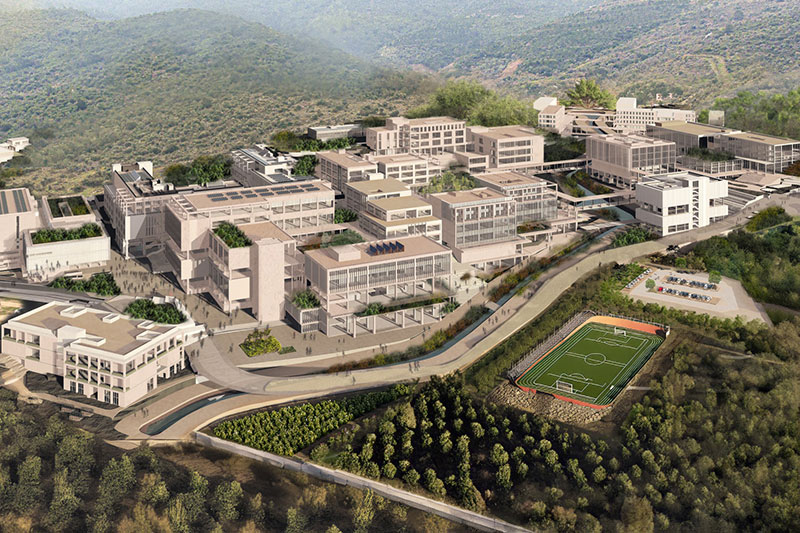
IZMIR UNIVERSITY OF ECONOMICS GÜZELBAHÇE CAMPUS
DetailsGLOBAL CAREER
As Izmir University of Economics transforms into a world-class university, it also raises successful young people with global competence.
More..CONTRIBUTION TO SCIENCE
Izmir University of Economics produces qualified knowledge and competent technologies.
More..VALUING PEOPLE
Izmir University of Economics sees producing social benefit as its reason for existence.
More..
You are one step ahead with your graduate education at Izmir University of Economics.