

- University
- Academic
- Schools/Vocational Schools
- Vocational School of Justice
- Vocational School
- Vocational School
- Department of Banking and Insurance (Turkish)
- Department of Computer Programming (Turkish)
- Department of Foreign Trade (Turkish)
- Department of Graphic Design (Turkish)
- Department of Interior Design (Turkish)
- Department of Construction Technology (Turkish)
- Department of Occupational Health and Safety (Turkish)
- Department of Media and Communication (Turkish)
- Department of Architectural Restoration (Turkish)
- Department of Radio and Tv Programming (Turkish)
- Department of Civil Aviation Cabin Services (Turkish)
- Department of Civil Aviation Transportation Management (Turkish)
- Department of Tourism and Hotel Management (Turkish)
- Department of Applied English Translation
- Vocational School Of Health Services
- Vocational School Of Health Services
- Department of Child Development (Turkish)
- Department of Physiotherapy (Turkish)
- Department of Paramedic (Turkish)
- Department of Opticianry (Turkish)
- Department of Medical Documentation and Secreteriat (Turkish)
- Department of Medical Imaging Techniques (Turkish)
- Department of Medical Laboratory Techniques (Turkish)
- Department of Elderly Care (Turkish)
- School of Applied Management Sciences
- School of Foreign Languages
- Faculties
- Faculty of Arts and Sciences
- Faculty of Fine Arts and Design
- Faculty of Law
- Faculty of Communication
- Faculty of Business
- Faculty of Engineering
- Faculty of Engineering
- Department of Computer Engineering
- Department of Biomedical Engineering
- Department of Electrical and Electronics Engineering
- Department of Industrial Engineering
- Department of Food Engineering
- Department of Genetics and Bioengineering
- Department of Aerospace Engineering
- Department of Civil Engineering
- Department of Mechanical Engineering
- Department of Mechatronics Engineering
- Department of Software Engineering
- Faculty of Health Sciences
- Medicine
- Graduate School
- Common Courses
- Schools/Vocational Schools
- Research
- Research Centers
- Library
- Smart Campus
- Technology Transfer Office
- İzmir Sciencepark
- Continuous Education Center (EKOSEM)
- Children's University
- Ethics Committee
- Teaching and Learning Center (EKOEĞİTİM)
- Psychology Application and Research Center
- Researcher Training Coordinatorship
- Research Collaborations And Innovation Coordinatorship
- Campus
- INTERNATIONAL
- Contact
- 25TH YEAR
Department of Sociology
SOC 372 | Course Introduction and Application Information
| Course Name |
Artificial Intelligence and Society
|
|
Code
|
Semester
|
Theory
(hour/week) |
Application/Lab
(hour/week) |
Local Credits
|
ECTS
|
|
SOC 372
|
Fall/Spring
|
3
|
0
|
3
|
6
|
| Prerequisites |
None
|
|||||
| Course Language |
English
|
|||||
| Course Type |
Elective
|
|||||
| Course Level |
First Cycle
|
|||||
| Mode of Delivery | face to face | |||||
| Teaching Methods and Techniques of the Course | DiscussionGroup WorkQ&ALecture / Presentation | |||||
| National Occupation Classification | - | |||||
| Course Coordinator | ||||||
| Course Lecturer(s) | ||||||
| Assistant(s) | - | |||||
| Course Objectives | This course aims to explore the relationship between artificial intelligence and society by examining how AI technologies shape, and are shaped by, cultural, political, and economic forces. |
| Learning Outcomes |
The students who succeeded in this course;
|
| Course Description | This course explores the social dimensions of artificial intelligence, focusing on how AI technologies interact with culture, politics, labor, and everyday life. Through interdisciplinary readings, multimedia content, and class discussions, students will critically engage with topics such as algorithmic bias, surveillance, automation, and digital ethics. The course also examines how AI is represented in popular media and public discourse. |
| Related Sustainable Development Goals |


|
|
|
Core Courses | |
| Major Area Courses | ||
| Supportive Courses |
X
|
|
| Media and Management Skills Courses | ||
| Transferable Skill Courses |
WEEKLY SUBJECTS AND RELATED PREPARATION STUDIES
| Week | Subjects | Related Preparation |
| 1 | Introduction | |
| 2 | From Automata to Automation and Intelligent Systems: A Historical Background of Artificial Intelligence | Bruce G. Buchanan, “A (Very) Brief History of Artificial Intelligence,” AI Magazine 26, no. 4 (2005): 53–60 |
| 3 | Demystifying the Machine: Sociological Definitions of AI | Zheng Liu, “Sociological Perspectives on Artificial Intelligence: A Typological Reading,” Sociology Compass 15, no. 3 (2021) Kelly Joyce and Taylor M. Cruz, “A Sociology of Artificial Intelligence: Inequalities, Power, and Data Justice,” Socius: Sociological Research for a Dynamic World 10 (2024): 1–6 |
| 4 | Bias by Design | Cathy O’Neil, Weapons of Math Destruction: How Big Data Increases Inequality and Threatens Democracy (New York: Crown Publishing Group, 2016), Introduction and Chapter 1, pp. 1–28. |
| 5 | Surveillance & Data Capitalism | Kate Crawford, Atlas of AI: Power, Politics, and the Planetary Costs of Artificial Intelligence (New Haven and London: Yale University Press, 2021), Chapter 6, “State,” pp. 181–208. |
| 6 | Labor, Automation and Social Inequalities | Kate Crawford, Atlas of AI: Power, Politics, and the Planetary Costs of Artificial Intelligence (New Haven and London: Yale University Press, 2021) Chapter 2, “Labor,” pp. 39–68. |
| 7 | AI Myths & Popular Culture | Stephen Cave and Kanta Dihal, “A Brief History of AI Narratives,” in AI Narratives: A History of Imaginative Thinking About Intelligent Machines, eds. Stephen Cave, Kanta Dihal, and Sarah Dillon (Oxford: Oxford University Press, 2020), 3–24. Tom Pollard, “Popular Culture’s AI Fantasies: Killers and Exploiters or Assistants and Companions?” Perspectives on Global Development and Technology 19 (2020): 97–109. |
| 8 | Intimacy and Companionship | Sherry Turkle, Alone Together: Why We Expect More from Technology and Less from Each Other (New York: Basic Books, 2011), Chapters 8 and 10, pp. 173–205 and 231–260. Sike Gao, “A Study of Datafication and Digital Intimacy on Tinder,” Media and Communication Research 6, no. 2 (2025): 126–132. |
| 9 | Midterm Week | |
| 10 | Healthcare and Ethics | Meredith Broussard, Artificial Unintelligence: How Computers Misunderstand the World (Cambridge, MA: MIT Press, 2018), Chapter 1, “Hello, Reader,” pp. 1–12. Journal Article: Ziad Obermeyer, Brian Powers, Christine Vogeli, and Sendhil Mullainathan, “Dissecting Racial Bias in an Algorithm Used to Manage the Health of Populations,” Science 366, no. 6464 (2019): 447–453. |
| 11 | Creativity and Authorship | Roosa Wingström, Johanna Hautala, and Riina Lundman, “Redefining Creativity in the Era of AI? Perspectives of Computer Scientists and New Media Artists,” Creativity Research Journal 36, no. 2 (2024): 177–193, https://doi.org/10.1080/10400419.2022.2107850. |
| 12 | Environmental Impacts of AI and Climate Justice | Kate Crawford, Atlas of AI: Power, Politics, and the Planetary Costs of Artificial Intelligence (New Haven and London: Yale University Press, 2021), Chapter 3, “Earth,” pp. 69–100. |
| 13 | Global AI and Colonialism | Kate Crawford, Atlas of AI: Power, Politics, and the Planetary Costs of Artificial Intelligence (New Haven and London: Yale University Press, 2021), Chapter 5, “Power,” pp. 153–180. |
| 14 | Imagining AI Otherwise | Luciano Floridi, “Soft Ethics, the Governance of the Digital and the General Data Protection Regulation,” Philosophical Transactions of the Royal Society A 376, no. 2128 (2018): 20180081, |
| 15 | Semester Review | |
| 16 | Final Exam |
| Course Notes/Textbooks | Readings suggested in the syllabus. |
| Suggested Readings/Materials | Kate Crawford, Atlas of AI: Power, Politics, and the Planetary Costs of Artificial Intelligence (New Haven and London: Yale University Press, 2021). ISBN: 978-0300264630
Kanta Dihal, Stephen Cave, and Sarah Dillon, eds., AI Narratives: A History of Imaginative Thinking About Intelligent Machines (Oxford: Oxford University Press, 2020). ISBN: 978-0198914709
Cathy O’Neil, Weapons of Math Destruction: How Big Data Increases Inequality and Threatens Democracy (New York: Crown Publishing Group, 2016). ISBN: 978-0553418835
Janelle Shane, You Look Like a Thing and I Love You: How AI Works and Why It’s Making the World a Weirder Place (New York: Voracious, 2019). ISBN: 978-0316525220
Sherry Turkle, Alone Together: Why We Expect More from Technology and Less from Each Other (New York: Basic Books, 2011). ISBN: 978-0465031467 |
EVALUATION SYSTEM
| Semester Activities | Number | Weigthing |
| Participation | ||
| Laboratory / Application | ||
| Field Work | ||
| Quizzes / Studio Critiques |
5
|
30
|
| Portfolio | ||
| Homework / Assignments | ||
| Presentation / Jury | ||
| Project |
1
|
30
|
| Seminar / Workshop | ||
| Oral Exams | ||
| Midterm | ||
| Final Exam |
1
|
40
|
| Total |
| Weighting of Semester Activities on the Final Grade |
6
|
60
|
| Weighting of End-of-Semester Activities on the Final Grade |
1
|
40
|
| Total |
ECTS / WORKLOAD TABLE
| Semester Activities | Number | Duration (Hours) | Workload |
|---|---|---|---|
| Theoretical Course Hours (Including exam week: 16 x total hours) |
16
|
3
|
48
|
| Laboratory / Application Hours |
16
|
0
|
|
| Study Hours Out of Class |
14
|
3
|
42
|
| Field Work |
0
|
||
| Quizzes / Studio Critiques |
5
|
6
|
30
|
| Portfolio |
0
|
||
| Homework / Assignments |
0
|
||
| Presentation / Jury |
0
|
||
| Project |
1
|
25
|
25
|
| Seminar / Workshop |
0
|
||
| Oral Exam |
0
|
||
| Midterms |
0
|
||
| Final Exam |
1
|
35
|
35
|
| Total |
180
|
COURSE LEARNING OUTCOMES AND PROGRAM QUALIFICATIONS RELATIONSHIP
|
#
|
Program Competencies/Outcomes |
* Contribution Level
|
|||||
|
1
|
2
|
3
|
4
|
5
|
|||
| 1 |
To have the knowledge of classical and contemporary theories in sociology, and be able to comparatively analyze these theories. |
-
|
X
|
-
|
-
|
-
|
|
| 2 |
To have the knowledge of main methodological approaches in sociology as well as social research and data analysis methods. |
-
|
-
|
-
|
-
|
-
|
|
| 3 |
To have knowledge in the fields of general sociology, sociology of institutions, social structure and change, and applied sociology. |
-
|
X
|
-
|
-
|
-
|
|
| 4 |
To be able to determine the appropriate methods in the design of the planning stage and conclusion of a sociological project, individually or as part of a team. |
-
|
-
|
-
|
-
|
-
|
|
| 5 |
To be able to diagnose the social dynamics behind personal problems by using sociological imagination. |
-
|
-
|
X
|
-
|
-
|
|
| 6 |
To be able to define social problems at local, national, and global level, and offer new policies for solutions. |
-
|
-
|
-
|
-
|
-
|
|
| 7 |
To be able to apply commonly-used computer programs for data collection and analysis in sociological research. |
-
|
X
|
-
|
-
|
-
|
|
| 8 |
To be able to develop a socially responsible, scientific and ethical perspective regarding the collection, analysis, interpretation and presentation of data. |
-
|
-
|
-
|
-
|
-
|
|
| 9 |
To be able to analyze different aspects of the social world by drawing on the knowledge produced by other disciplines of the social sciences. |
-
|
-
|
-
|
-
|
-
|
|
| 10 |
To be able to constantly renew herself/himself professionally by following scientific and technological developments in sociology and social research. |
-
|
X
|
-
|
-
|
-
|
|
| 11 |
To be able to collect sociological data and communicate with sociologists and other social scientists in a foreign language ("European Language Portfolio Global Scale", Level B1). |
-
|
-
|
-
|
-
|
-
|
|
| 12 |
To be able to speak a second foreign at a medium level of fluency efficiently. |
-
|
-
|
-
|
-
|
-
|
|
| 13 |
To be able to relate the knowledge accumulated throughout the human history to their field of expertise. |
-
|
-
|
-
|
-
|
-
|
|
*1 Lowest, 2 Low, 3 Average, 4 High, 5 Highest


NEWSALL NEWS



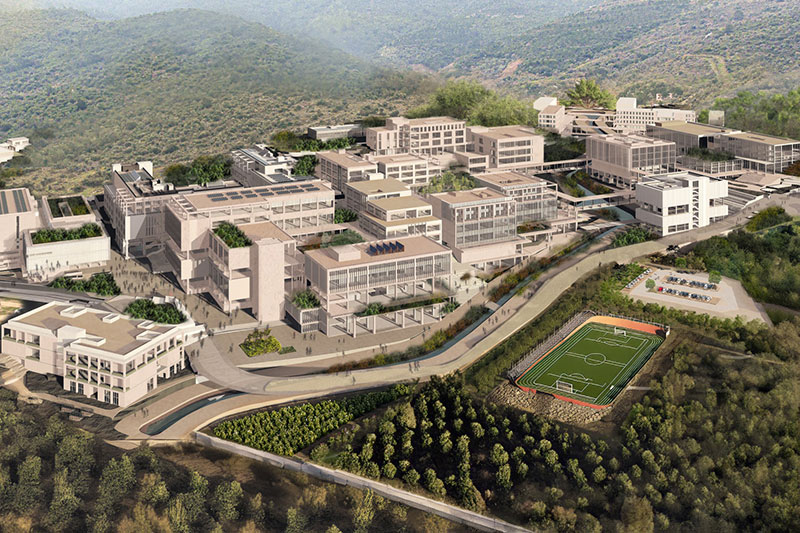
IZMIR UNIVERSITY OF ECONOMICS GÜZELBAHÇE CAMPUS
DetailsGLOBAL CAREER
As Izmir University of Economics transforms into a world-class university, it also raises successful young people with global competence.
More..CONTRIBUTION TO SCIENCE
Izmir University of Economics produces qualified knowledge and competent technologies.
More..VALUING PEOPLE
Izmir University of Economics sees producing social benefit as its reason for existence.
More..
You are one step ahead with your graduate education at Izmir University of Economics.