


- University
- Academic
- Schools/Vocational Schools
- Vocational School of Justice
- Vocational School
- Vocational School
- Department of Banking and Insurance (Turkish)
- Department of Computer Programming (Turkish)
- Department of Foreign Trade (Turkish)
- Department of Graphic Design (Turkish)
- Department of Interior Design (Turkish)
- Department of Construction Technology (Turkish)
- Department of Occupational Health and Safety (Turkish)
- Department of Media and Communication (Turkish)
- Department of Architectural Restoration (Turkish)
- Department of Radio and Tv Programming (Turkish)
- Department of Civil Aviation Cabin Services (Turkish)
- Department of Civil Aviation Transportation Management (Turkish)
- Department of Tourism and Hotel Management (Turkish)
- Department of Applied English Translation
- Vocational School Of Health Services
- Vocational School Of Health Services
- Department of Child Development (Turkish)
- Department of Physiotherapy (Turkish)
- Department of Paramedic (Turkish)
- Department of Opticianry (Turkish)
- Department of Medical Documentation and Secreteriat (Turkish)
- Department of Medical Imaging Techniques (Turkish)
- Department of Medical Laboratory Techniques (Turkish)
- Department of Elderly Care (Turkish)
- School of Applied Management Sciences
- School of Foreign Languages
- Faculties
- Faculty of Arts and Sciences
- Faculty of Fine Arts and Design
- Faculty of Law
- Faculty of Communication
- Faculty of Business
- Faculty of Engineering
- Faculty of Engineering
- Department of Computer Engineering
- Department of Biomedical Engineering
- Department of Electrical and Electronics Engineering
- Department of Industrial Engineering
- Department of Food Engineering
- Department of Genetics and Bioengineering
- Department of Aerospace Engineering
- Department of Civil Engineering
- Department of Mechanical Engineering
- Department of Mechatronics Engineering
- Department of Software Engineering
- Faculty of Health Sciences
- Medicine
- Graduate School
- Common Courses
- Schools/Vocational Schools
- Research
- Research Centers
- Library
- Smart Campus
- Technology Transfer Office
- İzmir Sciencepark
- Continuous Education Center (EKOSEM)
- Children's University
- Ethics Committee
- Teaching and Learning Center (EKOEĞİTİM)
- Psychology Application and Research Center
- Researcher Training Coordinatorship
- Research Collaborations And Innovation Coordinatorship
- Campus
- INTERNATIONAL
- Contact
- 25TH YEAR
Department of Sociology
SOC 423 | Course Introduction and Application Information
| Course Name |
Social Movements
|
|
Code
|
Semester
|
Theory
(hour/week) |
Application/Lab
(hour/week) |
Local Credits
|
ECTS
|
|
SOC 423
|
Fall/Spring
|
3
|
0
|
3
|
6
|
| Prerequisites |
None
|
|||||
| Course Language |
English
|
|||||
| Course Type |
Elective
|
|||||
| Course Level |
First Cycle
|
|||||
| Mode of Delivery | - | |||||
| Teaching Methods and Techniques of the Course | DiscussionCase StudyQ&ALecture / Presentation | |||||
| National Occupation Classification | - | |||||
| Course Coordinator | - | |||||
| Course Lecturer(s) | ||||||
| Assistant(s) | - | |||||
| Course Objectives | This course aims to introduce major sociological concepts and debates about the formation, dynamics and consequences of social movements. It introduces early social movements from the nineteenth century onwards, while primarily focusing on the waves of social movements and protests that have emerged since the 1960s. The course also aims to provide students with the main concepts and theoretical approaches necessary to analyse social movements. |
| Learning Outcomes |
The students who succeeded in this course;
|
| Course Description | This course examines social movements and protests from the nineteenth century to the present, with particular emphasis on the waves of collective action that have emerged since the 1960s. It introduces the major theories and concepts developed to explain the emergence, development, and consequences of social movements. Drawing on these theoretical perspectives, the course examines different waves of social movements and protests in their specific socio-political contexts. It explores the conditions under which movements emerge and mobilise, the social groups and actors involved in them, and the extent to which they generate social, economic, political, and cultural change. |
| Related Sustainable Development Goals |
|
|
|
Core Courses | |
| Major Area Courses |
X
|
|
| Supportive Courses | ||
| Media and Management Skills Courses | ||
| Transferable Skill Courses |
WEEKLY SUBJECTS AND RELATED PREPARATION STUDIES
| Week | Subjects | Related Preparation |
| 1 | Introduction and Overview of the Course | |
| 2 | What is a Social Movement? | Della Porta, Donatella, and Mario Diani, eds. The Oxford handbook of social movements. Oxford: Oxford University Press, 2015: 1-30. Berberoglu, Berch. (eds.) The Palgrave Handbook of Social Movements, Revolution, and Social Transformation. Cham:Palgrave Macmillan, 2019: 1-14. |
| 3 | Early Social Movements | Aminzade, Ronald. "Between movement and party: The transformation of mid-nineteenth century French republicanism." In Jenkins, J. Craig and Bert Klandermans (eds.). The politics of social protest, Taylor & Francis, 1995: 39-62. Tilly, Charles, Ernesto Castañeda and Lesley J. Wood. "Social Movements, 1768–2018”. NY: Routledge, 2019: 41-127. |
| 4 | Labor Movements I | Berberoglu, Berch. "The Marxist Theory of Social Movements, Revolution, and Social Transformation." The Palgrave Handbook of Social Movements, Revolution, and Social Transformation. Cham: Palgrave Macmillan, 2019: 65-83. Tilly, Charles, Ernesto Castañeda and Lesley J. Wood. "Social Movements, 1768–2018”. NY: Routledge, 2020: 41-67. |
| 5 | Labor Movements II | Silver, Beverly J., and Sahan Savas Karatasli. "Historical dynamics of capitalism and labor movements." in Della Porta, Donatella, and Mario Diani, eds The Oxford Handbook of Social Movements, Oxford: Oxford University Press, 2015: 133-145. |
| 6 | 20th Century Early Movements | Petras, James F. "Twentieth-Century Socialist Revolutions and Their Class Components: Russia, China, Cuba, and Vietnam." In Berberoglu, Berch. (eds.) The Palgrave Handbook of Social Movements, Revolution, and Social Transformation. Cham: Palgrave Macmillan, 2019: 85-113. |
| 7 | Women’s Movement and Feminist Waves | Wulff, Stephen, Mary Bernstein, and Verta Taylor. "New theoretical directions from the study of gender and sexuality movements: Collective identity, multi-institutional politics, and emotions." in Della Porta, Donatella, and Mario Diani, eds The Oxford Handbook of Social Movements, Oxford: Oxford University Press, 2015: 108-130. Mann, Susan Archer, and Douglas J. Huffman. "The decentering of second wave feminism and the rise of the third wave." Science & Society (2005): 56-91. McBride, Dorothy E., and Amy G. Mazur. "Women’s movements, feminism, and feminist movements." Politics, Gender, and Concepts (2008): 219-243. Snyder, R. Claire. "What is third-wave feminism? A new directions essay." Signs: Journal of women in culture and society 34.1 (2008): 175-196. |
| 8 | Midterm | |
| 9 | Civil Rights Movements | Spector, Alan J. "Decade of Turbulence: Social Movements and Rebellion in the 1960s." In Berberoglu, Berch. (eds.) The Palgrave Handbook of Social Movements, Revolution, and Social Transformation. Cham: Palgrave Macmillan, 2019: 151-176. Ware, Leland. "Civil rights and the 1960s: A decade of unparalleled progress." Md. L. Rev. 72 (2012): 1087. Nelson, Jack. "The Civil Rights Movement-A Press Perspective." Hum. Rts. 28 (2001): 3-6. Hall, Simon. "Protest movements in the 1970s: The long 1960s." Journal of Contemporary History 43.4 (2008): 655-672. |
| 10 | New Social Movements I | Tarrow, Sidney. “Contentious Politics” in Della Porta, Donatella, and Mario Diani, eds The Oxford Handbook of Social Movements, Oxford: Oxford University Press, 2015: 86-106 Petras, James F., and Henry Veltmeyer. "Neoliberalism and Social Movements in Latin America: Mobilizing the Resistance." In Berberoglu, Berch. (eds.) The Palgrave Handbook of Social Movements, Revolution, and Social Transformation. Palgrave Macmillan, Cham, 2019: 177-211. Johnson, Toni. "LGBTI rights: the international context". In Handbook on Gender in World Politics. Edward Elgar Publishing, 2016: 153-161. Holtmaat, Rikki and Paul Post. "Enhancing LGBTI rights by changing the interpretation of the convention on the elimination of all forms of discrimination against women?." Nordic Journal of Human Rights 33.4 (2015): 319-336. |
| 11 | New Social Movements II | Rootes, Christopher and Eugene Nulman. “The Impacts of Environmental Movements” in Della Porta, Donatella, and Mario Diani, eds The Oxford Handbook of Social Movements, Oxford: Oxford University Press, 2015: 729-740. Parks, Peggy. “The Green Movement” San Francisco: Reference Point Press, 2012. Tilly, Charles, Ernesto Castañeda and Lesley J. Wood. "Social Movements, 1768–2018”. NY: Routledge, 2020: 177-193. Olzak, Susan. "Ethnic and nationalist social movements." David A. Snow, Sarah A. Soule, Hanspeter Kriesi. “The Blackwell Companion to Social Movements”, Blackwell Publishing, 2004: 666-693. |
| 12 | New Social Movements III | Lindio-McGovern, Ligaya. "Neoliberal Globalization and Transnational Women’s Movements in the Early Twenty-First Century." in Berberoglu, Berch. (eds.) The Palgrave Handbook of Social Movements, Revolution, and Social Transformation. Cham: Palgrave Macmillan, 2019: 353-372. Welch, Levin. "Neoliberalism, the global capitalist crisis, and the Occupy Wall Street movement." in Berberoglu, Berch. (eds.) The Palgrave Handbook of Social Movements, Revolution, and Social Transformation. Cham: Palgrave Macmillan, 2019: 325-351. Tilly, Charles, Ernesto Castañeda and Lesley J. Wood. "Social Movements, 1768–2018”. NY: Routledge, 2020: 194-204. |
| 13 | Theories of Social Movements I | Peoples, Clayton D. "Classical and contemporary conventional theories of social movements." In Berberoglu, Berch. (eds.) The Palgrave Handbook of Social Movements, Revolution, and Social Transformation. Cham: Palgrave Macmillan, 2019: 17-34. Morris, Aldon, and Cedric Herring. "Theory and research in social movements: A critical review." (1984). Press, Salem. "Theories of Social Movements." Sociology Reference Guide. Pasadena, California Hackensack, New Jersey: Salem Press 5.2 (2011). Buechler, Steven M. “Understanding social movements: Theories from the classical era to the present”. Routledge, 2016: 9-109. |
| 14 | Theories of Social Movements II | Foweraker, Joe. Theorizing social movements. Vol. 1. Pluto Press, 1995: 9-24 Jenkins, J. Craig. "Resource mobilization theory and the study of social movements." Annual review of sociology (1983): 527-553. Sen, Anindya, and Ömer Avci. "Why social movements occur: Theories of social movements." Journal of Knowledge Economy and Knowledge Management 11.1 (2016): 125-130. Buechler, Steven M. “Understanding social movements: Theories from the classical era to the present”. Routledge, 2016:109-229. |
| 15 | Review of the semester | |
| 16 | Final Exam |
| Course Notes/Textbooks | Della Porta, Donatella, and Mario Diani, eds. The Oxford handbook of social movements. Oxford University Press
Berberoglu, Berch. (eds.) The Palgrave Handbook of Social Movements, Revolution, and Social Transformation. Cham: Palgrave Macmillan, 2019.
Tilly, Charles, Ernesto Castañeda and Lesley J. Wood. "Social Movements, 1768–2018”. NY: Routledge, 2019.
David A. Snow, Sarah A. Soule, Hanspeter Kriesi. “The Blackwell Companion to Social Movements”, Blackwell Publishing, 2004. |
| Suggested Readings/Materials |
EVALUATION SYSTEM
| Semester Activities | Number | Weigthing |
| Participation |
1
|
10
|
| Laboratory / Application | ||
| Field Work | ||
| Quizzes / Studio Critiques | ||
| Portfolio | ||
| Homework / Assignments | ||
| Presentation / Jury | ||
| Project | ||
| Seminar / Workshop | ||
| Oral Exams | ||
| Midterm |
1
|
30
|
| Final Exam |
1
|
60
|
| Total |
| Weighting of Semester Activities on the Final Grade |
2
|
40
|
| Weighting of End-of-Semester Activities on the Final Grade |
1
|
60
|
| Total |
ECTS / WORKLOAD TABLE
| Semester Activities | Number | Duration (Hours) | Workload |
|---|---|---|---|
| Theoretical Course Hours (Including exam week: 16 x total hours) |
16
|
3
|
48
|
| Laboratory / Application Hours |
16
|
0
|
|
| Study Hours Out of Class |
15
|
3
|
45
|
| Field Work |
0
|
||
| Quizzes / Studio Critiques |
0
|
||
| Portfolio |
0
|
||
| Homework / Assignments |
0
|
||
| Presentation / Jury |
0
|
||
| Project |
0
|
||
| Seminar / Workshop |
0
|
||
| Oral Exam |
0
|
||
| Midterms |
1
|
27
|
27
|
| Final Exam |
1
|
60
|
60
|
| Total |
180
|
COURSE LEARNING OUTCOMES AND PROGRAM QUALIFICATIONS RELATIONSHIP
|
#
|
Program Competencies/Outcomes |
* Contribution Level
|
|||||
|
1
|
2
|
3
|
4
|
5
|
|||
| 1 |
To have the knowledge of classical and contemporary theories in sociology, and be able to comparatively analyze these theories. |
X
|
-
|
-
|
-
|
-
|
|
| 2 |
To have the knowledge of main methodological approaches in sociology as well as social research and data analysis methods. |
X
|
-
|
-
|
-
|
-
|
|
| 3 |
To have knowledge in the fields of general sociology, sociology of institutions, social structure and change, and applied sociology. |
-
|
X
|
-
|
-
|
-
|
|
| 4 |
To be able to determine the appropriate methods in the design of the planning stage and conclusion of a sociological project, individually or as part of a team. |
-
|
-
|
-
|
-
|
-
|
|
| 5 |
To be able to diagnose the social dynamics behind personal problems by using sociological imagination. |
-
|
-
|
-
|
-
|
X
|
|
| 6 |
To be able to define social problems at local, national, and global level, and offer new policies for solutions. |
-
|
X
|
-
|
-
|
-
|
|
| 7 |
To be able to apply commonly-used computer programs for data collection and analysis in sociological research. |
-
|
-
|
-
|
-
|
-
|
|
| 8 |
To be able to develop a socially responsible, scientific and ethical perspective regarding the collection, analysis, interpretation and presentation of data. |
X
|
-
|
-
|
-
|
-
|
|
| 9 |
To be able to analyze different aspects of the social world by drawing on the knowledge produced by other disciplines of the social sciences. |
-
|
X
|
-
|
-
|
-
|
|
| 10 |
To be able to constantly renew herself/himself professionally by following scientific and technological developments in sociology and social research. |
X
|
-
|
-
|
-
|
-
|
|
| 11 |
To be able to collect sociological data and communicate with sociologists and other social scientists in a foreign language ("European Language Portfolio Global Scale", Level B1). |
-
|
-
|
-
|
-
|
-
|
|
| 12 |
To be able to speak a second foreign at a medium level of fluency efficiently. |
-
|
-
|
-
|
-
|
-
|
|
| 13 |
To be able to relate the knowledge accumulated throughout the human history to their field of expertise. |
-
|
-
|
-
|
-
|
-
|
|
*1 Lowest, 2 Low, 3 Average, 4 High, 5 Highest


NEWSALL NEWS



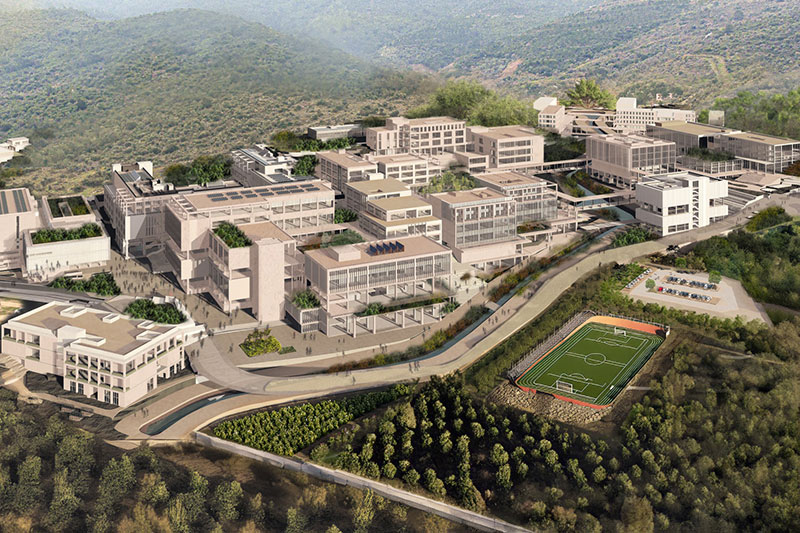
IZMIR UNIVERSITY OF ECONOMICS GÜZELBAHÇE CAMPUS
DetailsGLOBAL CAREER
As Izmir University of Economics transforms into a world-class university, it also raises successful young people with global competence.
More..CONTRIBUTION TO SCIENCE
Izmir University of Economics produces qualified knowledge and competent technologies.
More..VALUING PEOPLE
Izmir University of Economics sees producing social benefit as its reason for existence.
More..
You are one step ahead with your graduate education at Izmir University of Economics.